
Emergency Electrician Guide: When to Call, What to Expect, and What It Costs
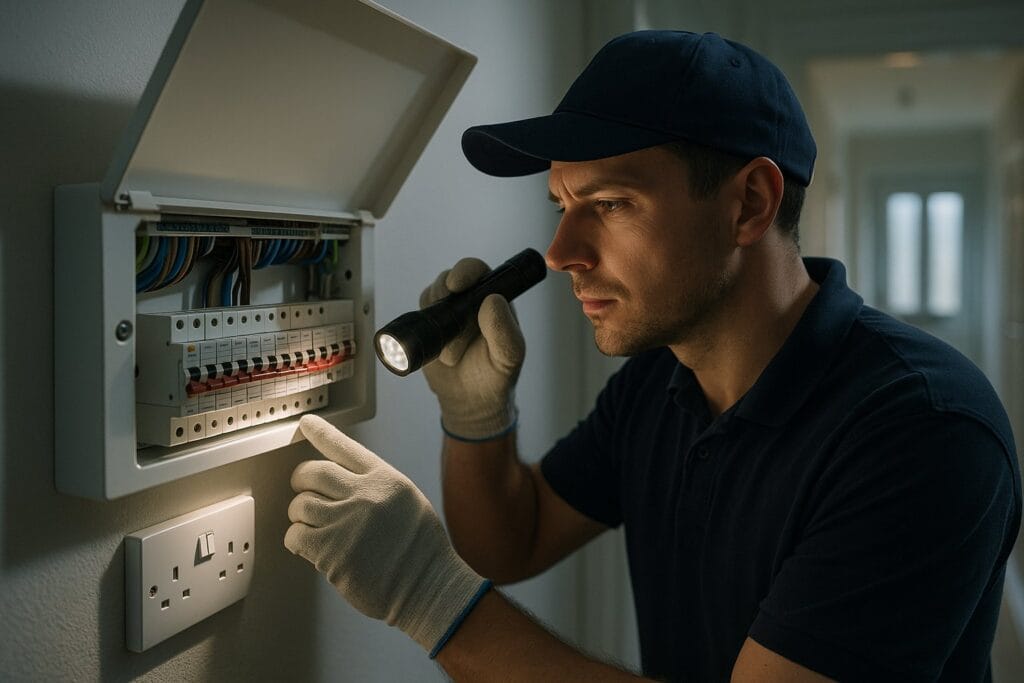
It is 11pm, there is a sharp smell of hot plastic near your fuse board, and you have just switched everything off at the wall because you are not sure what else to do. That sinking, slightly panicky moment — is this dangerous, can it wait until morning, who do I even call? — is exactly when people search for an emergency electrician. This guide walks you through what actually counts as an electrical emergency, what to do in the first few minutes, what a 24/7 electrician will do when they arrive, and what it should cost, so you can make a calm decision under pressure.
GFL Electrical are NICEIC-approved electricians covering East London, and we take emergency calls around the clock. The advice below is the same we would give you on the phone.
What counts as an electrical emergency?
An electrical emergency is any situation where there is a real, immediate risk of fire, electric shock, or harm — or where a fault has left you without power in a way that is unsafe or unworkable. Not every electrical problem is an emergency. A single dead socket or an outside light that has stopped working can usually wait for a normal appointment. But anything involving heat, burning smells, sparks, water near electrics, or shocks should be treated as urgent.
The simple test we use: if leaving it alone overnight could start a fire or hurt someone, it is an emergency. If it is only an inconvenience, it can wait — and you will pay daytime rates instead of out-of-hours rates.
The signs that mean “call now”
These are the situations where you should stop using the affected circuit and call an emergency electrician straight away:
- A burning or fishy smell near sockets, switches, or the consumer unit (fuse board). Overheating plastic gives off a distinctive smell and is one of the clearest early warnings of a fire risk.
- Sparks, scorch marks, or discolouration around a socket, plug, or switch.
- Buzzing or crackling from the fuse board or a socket.
- A burning smell combined with a circuit that keeps tripping. A breaker that trips once may just need resetting; one that trips repeatedly, or trips with a smell, is telling you something is wrong.
- Exposed or damaged wiring, especially anywhere it could be touched or reach water.
- An electric shock from an appliance, tap, or socket — even a small “tingle.” People often tell us they got a shock off the kettle or a socket and assumed it was static. It usually is not, and it should always be checked.
- Water reaching your electrics — a leak from a flat above, a soaked consumer unit, or water tracking into sockets.
Should you call 999 or an electrician?
This is the question we hear most in genuinely frightening situations, and the line is simple.
Call 999 if there is fire, smoke, or someone has had a serious shock. If something is actually burning, or a person is unresponsive, hurt, or cannot let go of something live, that is a fire-and-rescue or ambulance call first. Do not try to be the hero with a live circuit.
Call an emergency electrician if the situation is dangerous but not yet a fire or a medical emergency — the burning smell with no flames, the repeated tripping, the shock off a socket, the water getting close to electrics. An out-of-hours electrician can make it safe, find the fault, and stop it becoming a 999 call.
One real-world scenario we see often: a leak from an upstairs flat soaks the kitchen ceiling and starts dripping into the lights and sockets, and someone gets a shock trying to boil a kettle. In that case, turn the power off at the consumer unit if you can reach it safely, keep away from the wet area, and call an electrician — and if water is pouring through light fittings or anyone has been shocked, call 999 as well. It is also worth knowing that if you rent, a landlord’s out-of-hours line should treat this as an emergency; a frustration we hear a lot is being told “nothing can be done until morning” when there is live electricity near standing water. That is not an acceptable answer, and you are within your rights to escalate.
What to do while you wait
Once you have made the call, a few safe steps can stop the problem getting worse. None of these involve touching wiring — if a step feels unsafe, skip it and wait for the electrician.
- Switch off the affected circuit at the consumer unit if there is a burning smell, sparking, or water involved. If you are not sure which circuit it is and the situation feels dangerous, switch off the main switch for the whole property.
- Unplug the appliance that seems to be causing the problem, but only if you can do so without touching anything hot, wet, or damaged.
- Keep away from water near electrics. Do not stand in or touch water that may be in contact with live wiring.
- Do not reset a breaker that keeps tripping if there is any smell of burning. It is tripping to protect you.
- Get everyone, including pets, away from the area if there is smoke or a strong burning smell, and open a window if it is safe to do so.
These steps buy time and reduce risk. They are not a fix — the point of switching things off is to make it safe until someone qualified can find out *why* it happened.
What an emergency electrician actually does on the visit
People are often unsure what they are paying for, so here is what a call-out usually looks like from the moment we arrive.
First, we make the situation safe. That might mean isolating a circuit, disconnecting a faulty appliance, or shutting off power to part of the property. Safety comes before diagnosis.
Then we find the fault. This is the part that takes skill: tracing why a circuit is tripping, why a socket overheated, or where water has got into the system. We use test equipment to locate the problem rather than guessing, because guessing with electricity is how small faults become big ones.
Next, we either carry out the repair or, if parts are needed, make a safe temporary arrangement and book the permanent fix. For example, we can isolate a damaged circuit so the rest of your home has power tonight, then return to replace a damaged section properly in daylight.
Finally, we explain what happened and what it will take to put it right, and where the work affects your installation’s safety, we provide the appropriate certification. As NICEIC-approved electricians, the work we sign off meets the UK wiring regulations — which matters for your insurance as much as your safety.
Response times: what is realistic
Honest answer: it depends on where you are and what time it is. A good emergency electrician covering your area should be able to give you a realistic arrival window on the phone, not a vague “sometime.” Across East London, we aim to be with you fast, and many genuine emergencies — a tripping circuit, a faulty socket, restoring power to part of the property — are made safe within the first hour on site.
What matters more than a headline number is honesty: if we are 40 minutes away, we will tell you 40 minutes, and we will tell you what to do in the meantime. Beware anyone who promises an impossible time to win the call and then leaves you waiting.
What does an emergency electrician cost?
Emergency work costs more than a planned appointment because someone is on call, travelling, and working outside normal hours. That is fair — but it should never be a mystery. Here is what UK homeowners typically pay, so you know whether a quote is reasonable.
- Call-out / first hour: commonly around £90–£120, and a good electrician will tell you whether this includes the first hour of work.
- Hourly rate, daytime weekday: roughly £50–£80 per hour for non-urgent work.
- Hourly rate, evenings, nights, and weekends: typically £80–£150+ per hour, with the highest rates late at night and on weekends and bank holidays.
- London premium: rates in London and the South East sit at the higher end of these ranges.
A few things genuinely affect the price: the time of day (a Sunday 2am call costs more than a Tuesday afternoon), the complexity of the fault (a quick isolation versus tracing a hidden cable fault), and whether parts are needed. What should *not* affect it is surprise: a trustworthy electrician gives you a price, or a clear basis for the price, before starting work.
A common worry — and a reasonable one — is being overcharged precisely because it is urgent and you cannot shop around. Two simple protections: ask whether there is a minimum call-out charge and what it covers, and ask for the rate before they start. Anyone unwilling to talk money up front is a red flag.
How to choose an emergency electrician you can trust
When you are stressed and the clock is ticking, it is tempting to ring the first number you find. A 60-second check is worth it.
Look for NICEIC or NAPIT registration
Registration with a recognised body like NICEIC or NAPIT means the electrician’s work is regularly assessed against the UK wiring regulations. It is the single clearest signal that you are dealing with a qualified professional rather than someone who owns a multimeter. GFL Electrical are NICEIC approved.
Ask for a price before work starts
A reputable electrician will give you their call-out and hourly rate on the phone and confirm anything that affects it. Vague answers now usually mean an uncomfortable invoice later.
Check they actually cover your area
Someone genuinely local can give you a real arrival time and is more likely to be there in minutes rather than hours. If you are in East London, that is our patch.
Make sure the work is certified
After an emergency repair that affects your fixed wiring, you should receive the appropriate certificate. It proves the work is safe and you will want it for insurance and for any future sale or rental.
Common causes — and whether they were preventable
Most emergencies we attend trace back to a handful of causes: ageing or overloaded consumer units, water ingress, worn cabling in older properties, overloaded sockets, and DIY work that was not done to standard. Many of these give warning signs for weeks before they become a 2am call — a socket that runs warm, a breaker that trips “now and then,” lights that flicker when an appliance kicks in.
If you have noticed any of those, the cheapest emergency is the one that never happens. A periodic inspection (an EICR) catches deterioration before it becomes dangerous, and replacing a tired fuse board removes one of the most common causes of overheating. We would always rather book you in for a calm daytime check than meet you at midnight.
Frequently asked questions
Is a power cut an emergency? If the whole street is dark, it is your network operator’s problem — call 105 (free, UK-wide) to report it. If only your property has lost power while neighbours still have theirs, the fault is inside your installation, and that is worth an electrician’s call, especially if it came with a smell, a bang, or a trip.
My circuit breaker keeps tripping. Is that urgent? A one-off trip that resets cleanly is usually fine. Repeated tripping, tripping that will not reset, or tripping with any burning smell means stop, leave it off, and call an electrician — the breaker is doing its job of protecting you.
I got a small shock off a socket or appliance. Can I ignore it? No. Even a mild “tingle” can indicate a serious fault such as a failure of earthing. Stop using it, switch it off at the consumer unit if you can, and get it checked.
There is water coming through my ceiling light. What do I do? Keep clear, do not touch switches in the wet area, turn off the power at the consumer unit if you can reach it safely, and call an electrician. If water is pouring through fittings or anyone has had a shock, call 999 too.
How quickly can you get to me? We will give you an honest arrival window when you call, based on where you are in East London and the time. Many emergencies are made safe within the first hour on site.
Will it cost more at night or on a weekend? Yes — out-of-hours work carries a premium, with late nights and weekends the highest. We will tell you the rate before we start so there are no surprises.
Do I need a certificate after an emergency repair? If the work affects your fixed wiring, you should receive the appropriate certification. As NICEIC-approved electricians, we provide it, and it matters for your insurance.
Can you make it safe tonight and finish the job later? Often, yes. If parts are needed we can isolate the fault so the rest of your home stays powered, then return to complete the permanent repair.
If something feels wrong right now, call us
If you are reading this with a burning smell in the room or a board that will not stop tripping, switch off the affected circuit and pick up the phone. Tell us what is happening and what you can see or smell — no hard sell, just straight advice on whether it is safe to wait and how fast we can be there. GFL Electrical are NICEIC-approved and available around the clock across East London.
For our round-the-clock call-out service, see our emergency electrician page, or get in touch and tell us what is going on.
Based in East London? GFL Electrical are NICEIC-approved electricians covering Leyton, Walthamstow, Hackney, Stratford and the surrounding boroughs. See all the areas we cover, or get a quote.

0 Comments