
Electrician vs Handyman: Who Can Do Electrical Work?
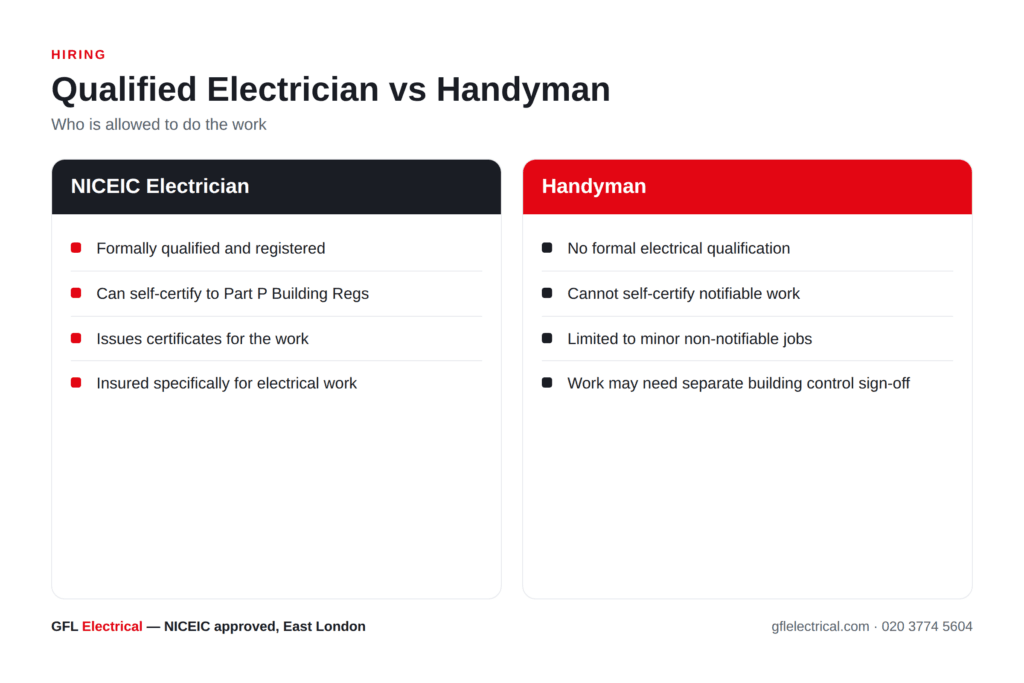
A handyman is brilliant for many home jobs — but electrical work is one area where the distinction really matters, for safety, legality, and when you come to sell. Here’s who can do what, and where the line is.
The short answer
A handyman can do genuinely minor, non-notifiable electrical tasks (like replacing a like-for-like light fitting on an existing circuit) if competent — but anything involving new circuits, the consumer unit, or special locations (bathrooms, outdoors) should be done by a qualified, registered electrician, because it’s notifiable under Part P and must be certified.
The issue isn’t usually the law forbidding a handyman from touching anything electrical — it’s competence, certification, and safety.
What needs a qualified electrician
- New circuits (cooker, EV charger, new ring main)
- Consumer unit (fuse box) replacement
- Work in bathrooms or outdoors (special locations)
- Rewiring (full or partial)
- Anything requiring testing and certification
All of the above is notifiable under Part P of the Building Regulations and must be either done by a registered competent person (who self-certifies) or notified to building control. See our Part P guide.
What a handyman might safely do
- Replacing a like-for-like light fitting or socket faceplate on an existing, sound circuit (non-notifiable)
- Changing a plug correctly
- Resetting a tripped breaker
Even these should only be done if genuinely competent and the circuit is sound — and if anything looks off (scorching, old wiring), it’s a job for an electrician.
Why it matters: three real risks
1. Safety. Electrical work done wrong can kill — through shock or fire. Qualified electricians are trained, test their work, and know the regulations.
2. Certification and selling your home. Notifiable work needs a Part P compliance certificate. When you sell, the buyer’s solicitor may ask for it — and uncertified work can delay the sale or force a retrospective inspection. A handyman can’t issue Part P certification.
3. Insurance. If a fire or injury results from non-compliant electrical work by someone unqualified, your insurer may decline the claim.
“But it’s just a small job”
The trouble is that small electrical jobs can hide big risks — a wrongly wired socket, a missing earth, an overloaded circuit. And some “small” jobs (anything in a bathroom, or a new circuit) are notifiable regardless of how quick they are. The cost of getting an electrician is small next to the cost of getting it wrong.
How to check someone’s qualified
- Look for registration with a competent-person scheme — for example NICEIC.
- Ask whether they’ll certify the work and provide a Part P certificate where needed.
- A registered electrician will happily confirm this; be wary of anyone vague about it.
The sensible rule
Use a handyman for the many jobs they’re great at — but for anything involving your fixed wiring, the consumer unit, bathrooms, outdoors, or new circuits, use a qualified, registered electrician. It protects your safety, your insurance, and your home’s saleability.
Need a qualified electrician?
For any electrical work that needs doing properly and certified, GFL Electrical are NICEIC-approved electricians across East London — clear pricing, certified work, no cut corners. See what we do or call 020 3774 5604.
Based in East London? GFL Electrical are NICEIC-approved electricians covering Leyton, Walthamstow, Hackney, Stratford and the surrounding boroughs. See all the areas we cover, or get a quote.

0 Comments