
Part P Building Regulations: What Electrical Work Is Notifiable?
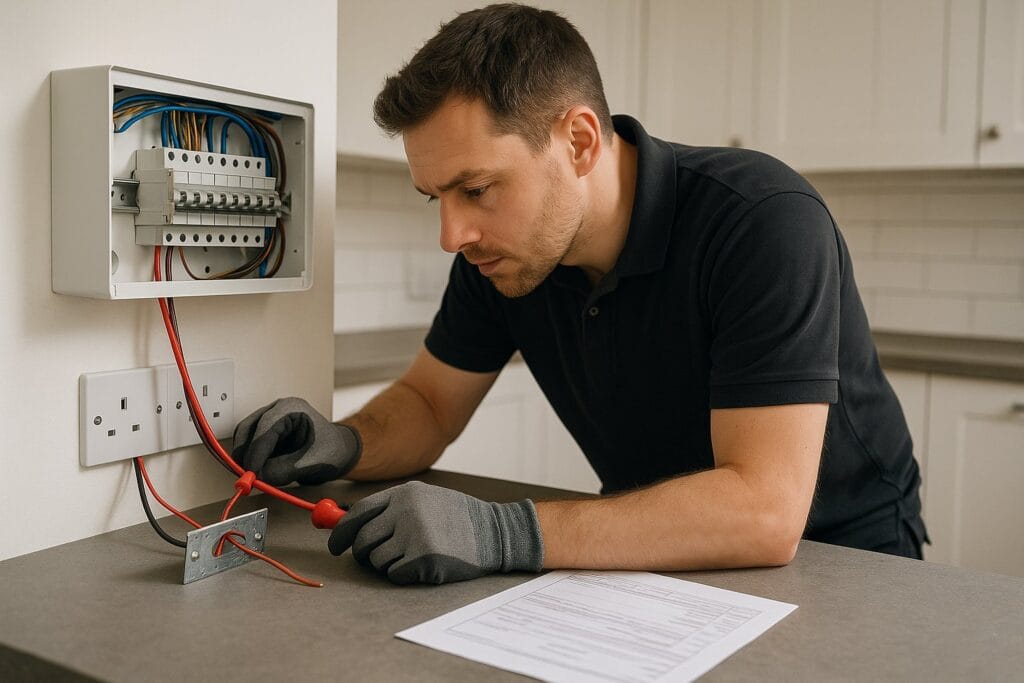
If you’re having electrical work done at home, you’ll hear the term “Part P” — and it matters more than people realise, especially when you come to sell. Here’s what Part P actually requires, which jobs are notifiable, and how to make sure your work is properly certified.
What Part P is
Part P is the section of the Building Regulations (England) that covers electrical safety in dwellings. It exists to make sure electrical work in homes is designed and installed safely, to the BS 7671 wiring standard. It applies to houses, flats, and their associated outbuildings and gardens.
Notifiable vs non-notifiable work
Part P splits electrical work into two categories.
Notifiable work — building control must be informed (or a registered electrician must self-certify). This includes:
- Installing a new circuit (for example a cooker, EV charger, or a new ring main)
- Replacing a consumer unit (fuse box)
- Work in special locations such as the zones around a bath or shower
Non-notifiable work — generally minor jobs like adding a socket or light to an existing circuit (outside special locations), or like-for-like repairs. These still have to comply with BS 7671, but don’t require notification.
The safe rule of thumb: anything involving a new circuit, the consumer unit, or a bathroom is notifiable.
How notification actually works
There are two routes:
- Use a registered competent person. Electricians registered with a self-certification scheme (such as NICEIC) can certify their own notifiable work and notify building control on your behalf. You receive a Building Regulations Compliance Certificate. This is by far the easiest and cheapest route.
- Notify building control directly. If the work is done by someone not registered, you (or they) must notify the local authority building control before work starts, and pay for them to inspect it. This is slower and usually more expensive.
Why the certificate matters when you sell
This is where homeowners get caught out. When you sell your home, the buyer’s solicitor will often ask for certification of electrical work — particularly a consumer unit change or rewire. If you can’t produce a Part P compliance certificate or building control sign-off, it can:
- Delay or jeopardise the sale
- Force you to pay for a retrospective inspection (an EICR) to satisfy the buyer
- Reduce buyer confidence
Keeping your certificates safe is genuinely worth it. Always get the paperwork when work is done, and store it with your house documents.
The risk of uncertified work
Beyond the sale headache, uncertified work done by someone not competent can be unsafe and uninsured. If a fire or injury results from non-compliant electrical work, insurers may decline a claim. Using a registered electrician protects you on safety, compliance, and insurance in one go.
Has Part P changed?
The detail of Part P has been refined over the years — for example some special-location rules have been adjusted — but the core principle is unchanged: electrical work in homes must be safe, compliant with BS 7671, and certified. The simplest way to stay current is to use a registered electrician who works to the latest edition.
Based in East London? GFL Electrical are NICEIC-approved electricians covering Leyton, Walthamstow, Hackney, Stratford and the surrounding boroughs. See our Part P notifiable electrical work, or the areas we cover.
Common questions
Do I need Part P for changing a light fitting? No — like-for-like replacement on an existing circuit isn’t notifiable, but it must still be done safely.
Is an EV charger notifiable? Yes — it’s a new dedicated circuit, so it’s notifiable and must be certified.
Can I do my own notifiable work? Legally you’d have to notify building control in advance and have it inspected — in practice it’s almost always cheaper and easier to use a registered electrician.
Get certified work, properly documented
GFL Electrical are NICEIC-registered, so notifiable work we carry out is self-certified and you receive the proper compliance certificate — no separate building control fees, no paperwork gaps when you come to sell. See our house rewiring and fuse box replacement services, or call 020 3774 5604.

0 Comments