
Heat Pump Electrical Installation: The Electrician’s Role

Most of the attention on heat pumps goes to the plumbing — the unit outside, the radiators, the hot water cylinder. But a heat pump is also a significant electrical load, and the electrical work is where a lot of installs quietly run into cost and delay. If you’re planning a heat pump in 2026, here’s what the electrical side actually involves and why it pays to get an electrician involved early.
Why a heat pump is an electrical job too
An air source heat pump typically draws far more power than ordinary appliances, often needing its own dedicated circuit back to the consumer unit. Depending on the model and your existing setup, that can mean:
- A new dedicated radial circuit with the correct cable size and protection
- Checking your main fuse and supply can handle the extra load
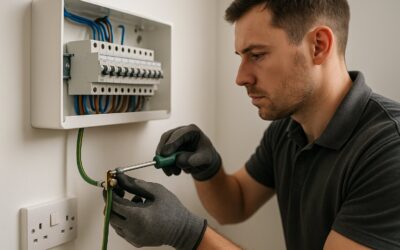
- Sometimes an upgrade to the fuse board to add capacity or modern protection
- Occasionally a supply upgrade (and in rare high-demand cases, three-phase)
Skipping this assessment is how people end up with tripping circuits, an overloaded supply, or an installer turning up to fit the unit only to find the electrics aren’t ready.
The load assessment comes first
Before anything is fitted, a competent electrician should carry out a load assessment — working out whether your existing supply and consumer unit can take the heat pump on top of everything else (cooker, shower, EV charger, the rest of the house). This is the single most important step, because it determines whether you need:
- Just a new circuit, or
- A consumer unit upgrade, or
- A larger main fuse / supply upgrade from your network operator
Finding this out at the planning stage is cheap. Finding it out on installation day is expensive.
Will I need my fuse board upgraded?
Often, yes — particularly in older homes. If your consumer unit is already full, lacks spare ways, or is an older type without modern RCD/RCBO protection, adding a heat pump circuit is the natural moment to bring it up to current standards. A modern board with the right protection keeps the new circuit safe and compliant with BS 7671. Our fuse box replacement service covers exactly this kind of upgrade.
Do I need three-phase power?
For most domestic air source heat pumps, no — a standard single-phase supply is enough. Three-phase becomes relevant only for larger properties, ground source systems, or where you’re combining a heat pump with other heavy loads like a 22kW EV charger and significant battery storage. If that’s your situation, it’s worth assessing supply capacity holistically rather than circuit by circuit; our three-phase installation page explains when it’s actually needed.
DNO notification and supply capacity
Your Distribution Network Operator (DNO) — the company that owns the cables in your street — may need to be notified of a heat pump, and in some cases must approve a supply or fuse upgrade before work proceeds. A good electrician handles this for you: checking whether notification or an application is needed, and arranging any upgrade. It’s an easy step to miss, and it can hold up an install if left to the last minute.
Coordinating with the heat pump installer
The smoothest heat pump projects are the ones where the electrician and the heating engineer talk to each other before installation day. The electrician makes sure the supply, board, and circuit are ready; the heating engineer fits the unit and connects it. When that coordination doesn’t happen, you get the classic delay: the heat pump is on the wall but can’t be commissioned because the electrical supply isn’t ready.
What good looks like
A properly handled heat pump electrical installation should include:
- A load assessment of your supply and consumer unit
- A correctly sized, dedicated circuit to BS 7671
- Any necessary fuse board upgrade done at the same time
- DNO notification or application where required
- Full certification of the electrical work
- Clear coordination with your heating installer
Planning a heat pump?
If you’re getting quotes for a heat pump, bring an electrician in early to check your supply and board — it’s the cheapest insurance against a delayed or over-budget install. GFL Electrical handle the electrical side of heat pump installations across East London, from load assessments to board upgrades and DNO applications. Call us on 020 3774 5604 or get in touch to check your home is ready.
Based in East London? GFL Electrical are NICEIC-approved electricians covering Leyton, Walthamstow, Hackney, Stratford and the surrounding boroughs. See all the areas we cover, or get a quote.

0 Comments