
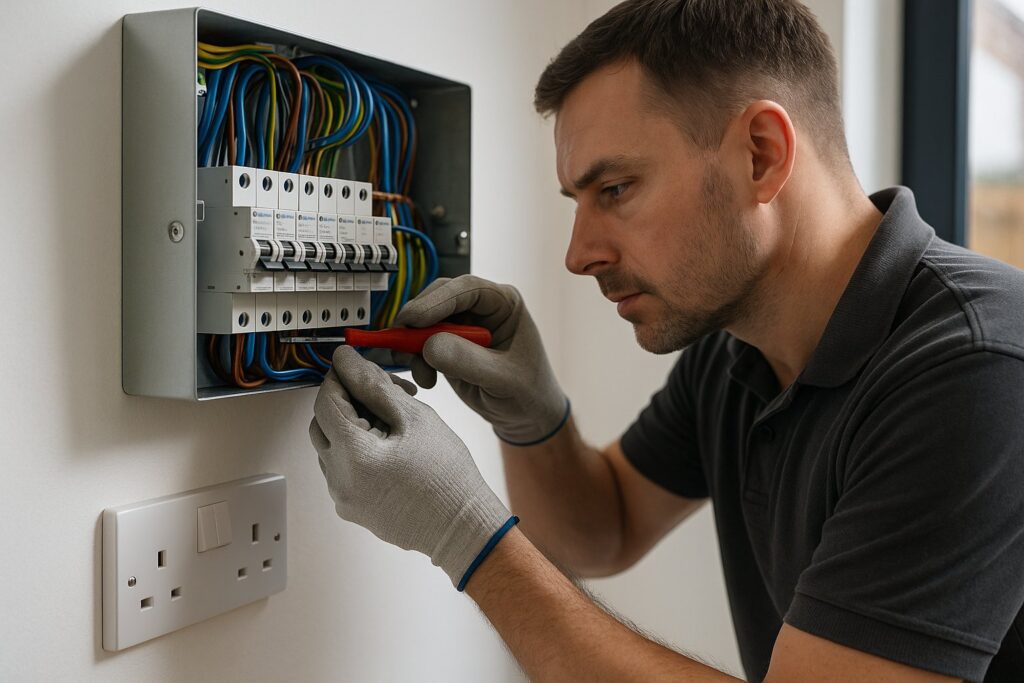
You’ll see “BS 7671” or “18th Edition” on electrical certificates and quotes — it’s the standard all UK electrical work is held to. Here’s what it actually is, the current version, and why it matters for your home.
What BS 7671 is
BS 7671 is the British Standard for electrical installations — the IET Wiring Regulations. It sets out how electrical installations should be designed, installed, inspected, and tested to be safe. When an electrician says work is “to BS 7671” or “18th Edition”, they mean it meets this standard.
It isn’t statutory law in itself, but compliance is how installers demonstrate work is safe, and it underpins Part P of the Building Regulations (see our Part P guide).
The current version: 18th Edition, Amendment 4 (2026)
The standard is updated periodically. The current version is:
- BS 7671:2018 — the 18th Edition, originally published 2018
- Updated by Amendment 2 (2022), Amendment 3 (2024), and now Amendment 4 (A4:2026), published 15 April 2026
Amendment 4 is a consolidated publication (it incorporates all previous amendments). The previous version (A2:2022 + A3:2024) is being withdrawn on 15 October 2026, after a transition period — so from late 2026, work should be to A4:2026.
What the amendments brought in
Recent amendments reflect new technology and safety thinking, including:
- AFDDs (arc fault detection devices) — required for socket circuits in higher-risk premises like HMOs, student accommodation, and care homes, and mandatory for those under A4:2026. See our AFDD guide.
- Provisions around EV charging, energy efficiency, and prosumer installations (solar, battery storage)
- Ongoing refinements to RCD protection and safety requirements
What it means for your home
You don’t need to know the detail — but it’s why:
- New installations have RCD/RCBO protection and metal consumer units
- EV chargers, rewires, and board changes are done to a defined safety standard and certified
- An EICR assesses your installation against the current edition (older installs aren’t automatically unsafe, but may attract C3 “improvement” observations where they differ from current requirements)
“My installation is old — is it now illegal?”
No. BS 7671 isn’t retrospective — an installation compliant when it was done doesn’t become illegal when the standard updates. But an EICR may note where it differs from current requirements, and genuine safety issues (no RCD protection, poor earthing) should be addressed. See our EICR codes guide.
Why use a registered electrician
An electrician registered with a scheme like NICEIC works to the current edition of BS 7671 and certifies their work accordingly — giving you compliant, safe, and properly documented electrics. That documentation matters for insurance and when you sell.
Electrical work done to standard
GFL Electrical work to the current edition of BS 7671 on every job across East London, with full certification. Whether it’s a rewire, a board upgrade, or an EICR, call 020 3774 5604 or get in touch.

0 Comments